The I Ching in Western Thought
The I Ching (易經, Book of Changes) is more than a divination manual — it is a 3,000-year-old philosophical text that quietly shaped some of the most important Western thinkers of the 20th century. These essays trace its influence on psychology, mathematics, and physics.
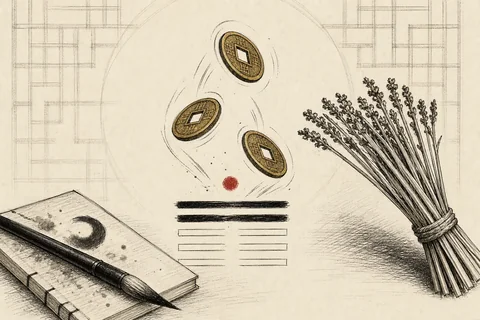
How to Read the I Ching
From framing the question to reading changing lines — the complete procedure, as it has actually been done for three thousand years.
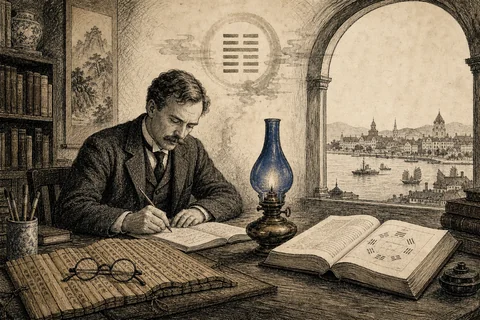
Richard Wilhelm and the I Ching
The Lutheran missionary who spent 22 years in Tsingtao with the Confucian scholar Lao Naixuan, producing the 1924 German translation that became the basis for nearly all modern Western readings of the I Ching.
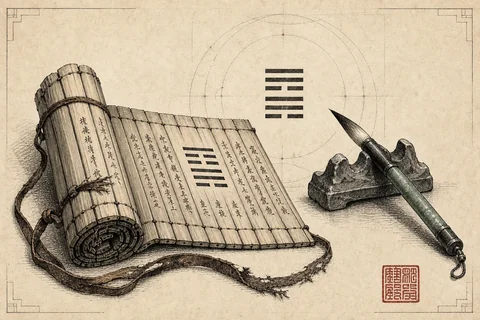
Confucius and the I Ching
The Ten Wings (十翼) — the commentaries traditionally attributed to Confucius — turned the I Ching from a divination manual into the philosophical canon of East Asia.
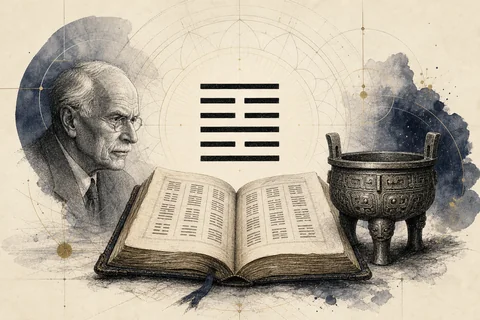
Carl Jung and the I Ching
How a friendship with the German sinologist Richard Wilhelm led Jung to consult the I Ching for decades — and to formulate his theory of synchronicity.
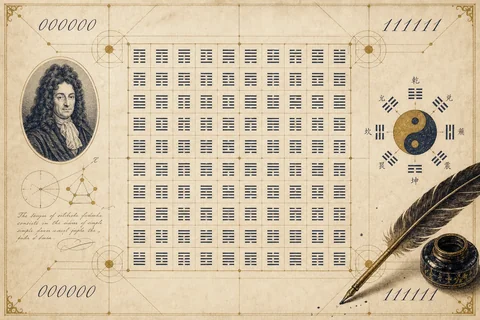
Leibniz and the I Ching
When Leibniz received the 64 hexagrams from a Jesuit missionary in 1701, he saw what nobody else had: the binary number system underpinning every computer today.
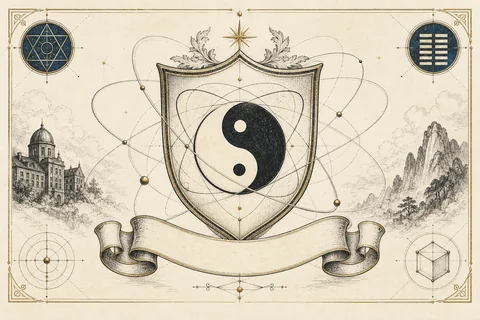
Niels Bohr and the I Ching
The Nobel laureate behind quantum complementarity adopted the taijitu (yin-yang) as the central symbol of his coat of arms — with the motto contraria sunt complementa.
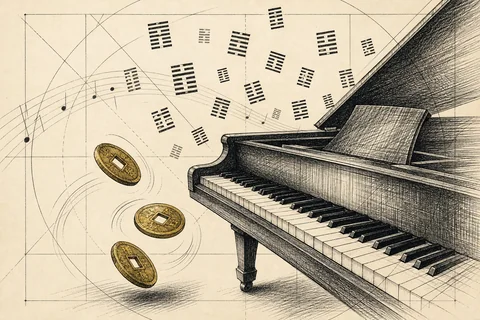
John Cage and the I Ching
From a 1949 Suzuki lecture to Music of Changes (1951) to a 1984 Commodore 64 program — how the I Ching became Cage's lifelong compositional tool.
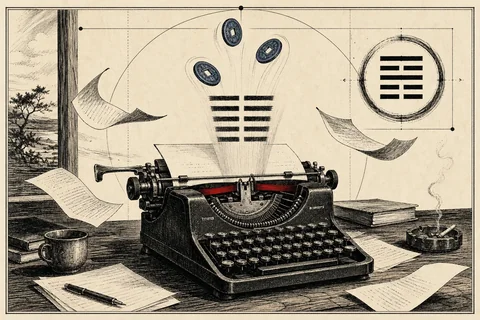
Philip K. Dick and the I Ching
The Hugo-winning novel The Man in the High Castle (1962) was, by Dick's own account, co-authored with the I Ching — and the hexagrams appear inside it as well.
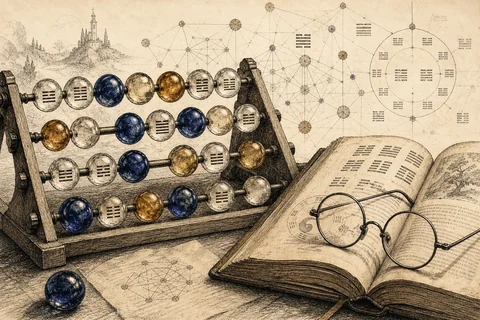
Hermann Hesse and the I Ching
Hesse reviewed Wilhelm's I Ching in 1925, wrote a celebrated essay on Hexagram 4, and built his Nobel-winning Glass Bead Game around the I Ching's combinatorial form.
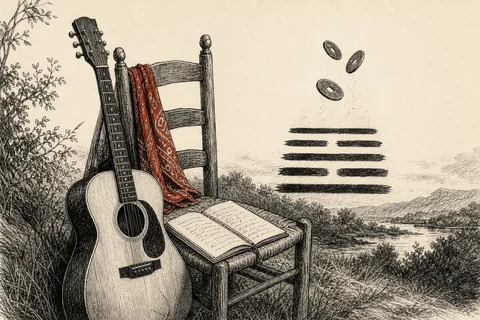
Bob Dylan and the I Ching
From the Greenwich Village folk scene of the 1960s to the enigmatic 1978 song "Changing of the Guards" — the Book of Changes in Dylan's milieu, his interviews, and his music.
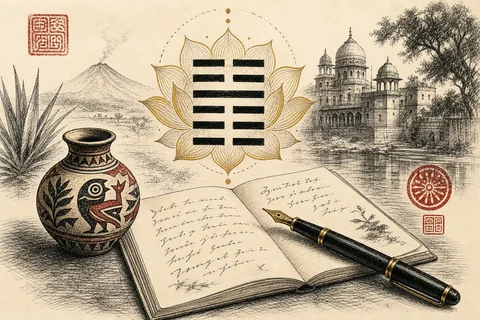
Octavio Paz and the I Ching
The 1990 Nobel laureate, Mexico's ambassador to India, took the yin-yang as a portable conceptual tool — and built Conjunciones y Disyunciones (1969) around it.
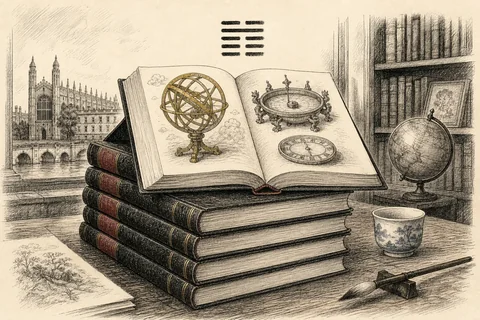
Joseph Needham and the I Ching
The Cambridge biochemist who spent 58 years writing the 27-volume Science and Civilisation in China, repositioning the I Ching as a foundational document of correlative theoretical inquiry.
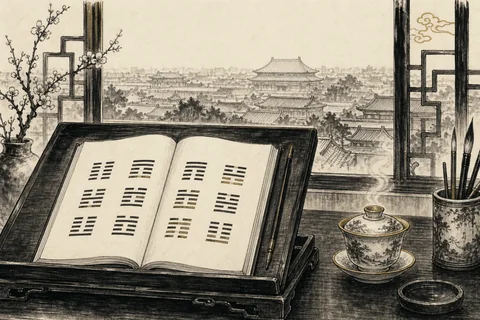
Hellmut Wilhelm and the I Ching
Richard Wilhelm's son delivered eight lectures on the I Ching in occupied Peking in 1943 — the resulting book is the standard post-Wilhelm secondary source in Western scholarship.
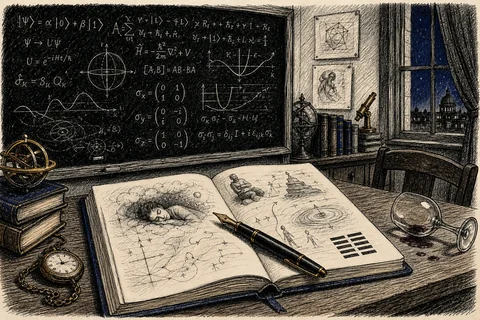
Wolfgang Pauli and the I Ching
The Nobel laureate physicist who co-developed synchronicity with Jung, used the I Ching for two decades, and co-authored the 1952 book where synchronicity was first published.
Consult the I Ching today
I Ching AI brings the same 3,000-year-old text — together with Wilhelm's German translation, the English Wilhelm-Baynes rendering, and a full Japanese translation — into a modern AI consultation app.
Download I Ching AI